The
Songs of Dzitbalché
Ancient Mayan Poetry
by Ah Bam
Translated by John Curl
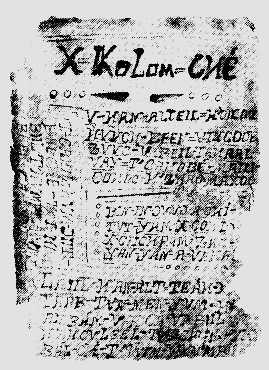
In this collection, known as Songs of Dzitbalché,
the only known ancient Maya lyric poetry, the poet speaks of
personal feelings and ideas, of love, philosophy, ancient rituals and
spiritual values. The following is a selection. More Songs of Dzitbalché are
included in Ancient American Poets.
These selections of
The Songs of Dzitbalché
offer a glimpse into
ANCIENT AMERICAN
POETS
Inca, Maya & Aztec
Poetry
translations and biographies of
the poets
by John Curl
published by
Bilingual Press (Arizona State
University)
Songs of
Dzitbalché read
in Yucatec Maya and in English Translations
on YouTube
CONTENTS
I Will Kiss Your Mouth
To Kiss Your Lips Beside
The Fence Rails
Let Us Go To The Receiving Of The
Flower
Flower Song
The Mourning Song Of The
Poor Motherless Orphan
The Song Of The
Minstrel
INTRODUCTION
BIBLIOGRAPHY
I WILL KISS YOUR
MOUTH
I will kiss your mouth
between the plants of the
milpa.
Shimmering beauty,
you have to hurry.
BIN IN TZ'UUTZ' A
CHI
Bin in tz'uutz' a chi
Tut yam x cohl
X ciichpam zac
Y an y an a u ahal
TO KISS YOUR
LIPS
BESIDE THE FENCE
RAILS
Put on your beautiful
clothes;
the day of happiness has
arrived;
comb the tangles from your
hair;
put on your most attractive
clothes
and your splendid
leather;
hang great pendants in the lobes
of
your ears; put on
a good belt; string
garlands
around your shapely
throat;
put shining coils
on your plump upper
arms.
Glorious you will be
seen,
for none is more beautiful
here
in this town, the seat of
Dzitbalché.
I love you, Beautiful
Lady.
I want you to be seen;
in
truth you are very
alluring,
I compare you to the smoking
star
because they desire you up to the
moon
and in the flowers of the
fields.
Pure and white are your clothes,
maiden.
Go give happiness with your
laugh,
put goodness in your heart,
because today
is the moment of happiness; all
people
put their goodness in
you.
TZ’UTZ’ A CHI
TU CAAP COOL HOK CHE
Tz’a ex a hatz’uutz nokeex;
tz’ooc u kuchul kin h cimac olil;
xeech u tzou tzotzel a pol;
tz’a u lemcech ciichcelmil a nok
tz’a hatz’utz xanaab;
ch’uuicinzah a nuucuuch tuup
tu tupil a xicin;
tz’a malob ooch’;
tz’a u keexiloob a x ciichpan caal;
tz’a, uu baakaal
hop men hop tu nak a kab.
t kailbelt caa i laac ciichpameech
hebiix maix maace
uay tu t cahil,
H’ Tz’iitbalcheé.
Cah in yacumaech
X Cichpan Colelbiil.
Lai beiltic
in kaat ca ilabe’ech
h’aach zempeech
ciichpamech,
tu men cu yan
ca chiicpaac ech ti x buutz’ ek,
tu men ca u tz’ibooltech
tac lail
u yetel u x lol nicte kaax.
Chen zacan
zacan a nok,
h’ x zuhuy,
xen a tz’a u cimac olil a chee
tz’a utz ta puczikal
tu men helae
u zutucil cimac olil
tu lacal uinic
lail c u tz’ailc
u yutzil ti teech.
LET US GO
TO THE RECEIVING OF THE
FLOWER
Let us sing
flowing with joy
because we are going
to
the Receiving of the
Flower.
All the maidens
wear a smile on their pure
faces;
their hearts
jump in their breasts.
What is the cause?
Because they know
that they will give
their virginity to those they
love.
Let the Flower sing!
Accompanying you will be the
Nacom
and the Great Lord Ah
Kulel
present on the
platform.
Ah Kulel sings:
"Let us go, let us go
lay down our wills before the
Virgin
the Beautiful Virgin and
Lady
the Flower of the
Maidens
on the high platform,
the Lady Suhay Kaak,
the Pretty X Kanleox,
the Lovely X Zoot
and the Beautiful Lady Virgin X
Tootmuch.
They are those who give
goodness
to life here in this
Region,
on the Plains and in the
district
here in the
Mountains."
Let us go, let us go,
let us go, youths;
we will give perfect
rejoicing
here in Dzitill Piich,
Dzitbalché.
COOX
H C KAM NICTE
Cimaac olailil
tan c kayiic
tu men bin cah
C’Kam C’Nicte.
Tu lacailil x chuup x loob bayen
chen chehlah chehlameec u yiich
tut ziit u puucziikalil
tut tz’uu u tzem.
Bail x tumen?
tumen yoheel
t’yolal u tz’iic
u zuhuyil colelil ti u yaacunah
Kayeex Nicteil!
C’yant ceex
Naacon
yetel Noh Yum Ah
Kulel
ah tan caan
chee.
Ah Culel hkay:
“Coneex
coneex
c’tz’a c’olaalill tu taan X
Zuhuz
X Ciichpan
Zuhuy
Colelbil u Lolil Loob
ayen
Tut can caan
che
U Colebil X M Zuhuy Kaak u,
beyxan x cichpan X’Kamleooch,
X ciichpan Xah Zoot,
yetel x’ciichpam colel
x zuhuy X T’oot much.
Laitie tz’iic utzil
cuxtalil uay yok peetne
uay yok chakme
tu zuut lumil
uay uitzil.”
Coox coox
coneex palaleex;
beey c tz’aic cici cimac
olil uay Tz’itil Piich
Tz’itilbalche.
FLOWER SONG
The most alluring moon
has risen over the
forest;
it is going to burn
suspended in the
center
of the sky to lighten
all the earth, all the
woods,
shining its light on
all.
Sweetly comes the air and the
perfume.
Happiness permeates all good
men.
We have arrived inside the
woods
where no one will see what we
have
come here to do.
We have brought plumeria
flowers,
chucum blossoms, dog
jasmines;
we have the copal,
the low cane vine,
the land tortoise
shell,
new quartz, chalk and cotton
thread;
the new chocolate cup,
the large fine flint,
the new weight,
the new needle work,
gifts of turkeys, new leather,
all new, even our hair
bands,
they touch us with
nectar
of the roaring conch
shell
of the ancients.
Already, already
we are in the heart of the
woods,
at the edge of the pool in the
stone
to await the rising
of the lovely smoking
star
over the forest.
Take off your clothes,
let down your hair,
become as you were
when you arrived here on
earth,
virgins, maidens.
KAY NICTE
X ciih x ciichpan u
tz’ u likil yook kaax;
tu bin u hopbal
tu chumuc can caan
tux cu ch’uuytal u zazicunz
yookol cab tu lacal kaax
chen cici u tal iik u utz’ben booc.
U tz’ u kuchul
chumuc caan
chen zact’in cab u zazilil
yook tu lacal baal.
yan cimac olil ti tu lacal malob uinic.
Tz’ooc cohol tu ichil u naak kaax
tuux maixi mac men max
hel u y ilconeil leil
baax c’taal c’beet.
T tazah lol nicte,
u lol chucum, u lol u tz’tul,
u lol x milah;
t tazah pom,
h ziit,
beyxan x coc box,
beyxan tumben hiib took yete tumben
kuch tumben luch,
bolnm yaax took,
bumben peetz’ilil,
bumben xoot,
beyxan n can x ulum tumben xanab,
bu lacal tumben lail xam u kaxil c’hool,
b tial c pooc niicte ha
beyxan c hoop zahub
bey u x kiliiz.
Tz’oci, tz’oci
t yan on tu tz’u kaax,
tu chi noh haltun
utial c’paat u hokol
x ciichpan buutz’ ek
yookol kaax.
Pitah nookeex
luuz u kaxil a holex
ba teneex
hee cohiceex uay yokol cabile
x zuhuyex x chupalelex hel u.
THE MOURNING
SONG
OF THE POOR MOTHERLESS
ORPHAN
DANCE TO
DRUMBEATS
I was very small when my mother
died,
when my father died.
Ay ay, my Lord!
Raised by the hands of
friends,
I have no family here on
earth.
Ay ay, my Lord!
Two days ago my friends
died,
and left me insecure
vulnerable, alone. Ay
ay!
That day I was alone
and put myself
in a stranger's hand.
Ay ay, my lord!
Evil, much evil passes
here
on earth. Perhaps
I will never stop
crying.
Without family,
alone, very lonely I
walk,
crying day and night
only cries consume my eyes and
soul.
Under evil so hard.
Ay ay, my Lord!
Take pity on me, put an
end
to this suffering.
Give me death , my Beautiful
Lord,
or give my soul
transcendence!
Poor, poor
alone on earth
pleading insecure
lonely
imploring door to door
asking every person I see to give
me love.
I who have no home, no
clothes,
no fire.
Ay my lord! Have pity on
my!
Give my soul
transcendence
to endure.
U YAYAH KAY
H OTZIL X MA NA
X PAM OOT CHE
Hach chiichanen caa cim in na
caa cim in yum.
Ay ay in Yumen!
Caa t p’at en tu kab
t yicnal in laak
miix maac y an t en uay y okol cab.
Ay ay in yumilen!
Cu man cap’el kin
cu cimil ten in laak
tin t’uluch c p’ate en
tin t’uluch hum. Ay ay!
Tz’u man lail kin tin hun p’at cen
caa tu han ch’ahen u bizen t nin
u p’el tz’ul tu kab.
Ay ay in yumilen!
H’loobil hach yaab yayab loob
tin manziic uay
yokol cab. Miix ua bikin
bin hauc in u okol.
Miix in uonel yan
hach chen tin hum
chen bey in man
uay tin lum
h’kin yetel akab
chen okol okol
xuupzic in uich
lail xuupzic ool.
Yam loob hach chich.
Ay in Yum!
Ch’aten otzilil tz’a u tibitil
leil yah muukyaa.
Tz’aten u tz’oc cimilil
ua tz’aten toh olal
in Ciichcelem Yumil!
Otzil otzil
baai tu hun y ook lum
ua yan ca u kaat
tu t’uluch hum
kaat men kaat tu hol nah nahil
tu lacal maac ilic
heleili u tz’iic yacunail.
Inan yotoch inam u nok
inan kaak.
Ay in Yum! Chaten otzilii!
Tz’aten toholal utial caa paatac
in muuk yahtic.
THE SONG OF THE
MINSTREL
This day there is a feast in the
villages.
Dawn streams over the
horizon,
south north east west,
light comes to the earth,
darkness is gone.
Roaches, crickets, fleas and
moths
hurry home.
Magpies, white doves, swallows,
partridges, mockingbirds,
thrushes, quail,
red and white birds rush
about,
all the forest birds begin their
song because
morning dew brings
happiness.
The Beautiful Star
shines over the woods,
smoking as it sinks and
vanishes;
the moon too dies
over the forest green.
Happiness of fiesta day has
arrived
in the villages;
a new sun brings light
to all who live together
here.
H’KAY BALTZ’AM
Kin kuilancail t cah nahlil.
U caah h tip’il t zazilil I kin tut
haal caan
t cu bin u bin bey nohol
bai t xaman bey t lakin bey xan t
chikin,
tumtal u zazil yokol cabilil
eh hook chen tiul tz’iic.
X kuuluuch yeet maaz yeet chiic yeet
x tz’unun
cu yaalcab t cuchil.
X baach, x zac pacal, tzuutzuuz,
bey nom, chaan beech, yeet x kook, x
zac chich,
h zaay c’yalcu tuumben
lail kaxil chiich cu hoopz cu kay
tumen
h’eeb ziam cen utzilil.
X Ciichpan Ek
hohopnan yook kaax
cu butz’ilan ca lamat lamat
u taal u cimil u
yook yaxil kaax.
Cimmaac olilil kin kuilail uay
tee t cahalil;
tumen tumben kin c’talal zaztal
t tu lacal uinicil t cah muul ba uay
t cahalil.
INTRODUCTION
The Songs of Dzitblaché include most of the ancient Maya
lyric poetry that has survived. In these songs, the poet speaks of
personal feelings and ideas, of love, philosophy, ancient rituals and
spiritual values.
The original title page reads, "The Book of the Dances of the
Ancients that it was the custom to perform here in the towns when the
whites had not yet arrived. This book was made by the honorable Mr.
Bam, great-grandson of the great Ah Kulel of the town of
Dzitbalché in the year 1440." The title, "Songs of
Dzitbalché," was given to the collection by the first
translator into Spanish, Alfredo Barrera Vásquez, and it is by
this name that it is generally known. Written above the title is the
word kolomché - a ceremonial dance - and below it is the first
poem, "I Will Kiss Your Lips."
The manuscript itself was probably written in the 1700s, though it
could be a copy of an earlier manuscript. Some of the material it
contains is clearly much older, probably from the 1400s. A number of
the poems incorporate fragments of ancient ceremonies; others are
descriptions of those ceremonies. It is not always possible to
distinguish between the two. The poems about the ceremonies were
written by Ah Bam during the colonial period, while the cermonies
described are clearly ancient.
The Yucatec Maya Language
The Mayence language family diverged from a common stock over the
centuries into the large variety of related languages found
throughout the Maya region today, much as the Romance languages
diverged from Latin. There are 28 Mayance languages with numerous
dialects. Yucatecan Maya however, forms one of the three major
subgroupings, the others being Huastecan and Southern Mayan. All the
Mayance language speakers together total about 4 million people.
Yucatec Maya remains understandable throughout the Yucatán
peninsula, despite minor local differences. Over 450,000 people speak
Maya in Yucatán today.
BIBLIOGRAPHY
Sources and Translations
In translating these texts I primarily refered to Barrera
Vásquez's pioneering translation into Spanish (Mérida,
1965). I also referred to Munro S. Edmonson's English translation
(Mexico, 1982), which is loosely based on Barrera Vásquez, but
less literal.
Useful in understanding these texts is an acquaintence with the
various Books of Chilam Balam (Barrera Vásquez, 1948,
and many other translations), the Ritual of the Bacabs (Roys,
Norman, 1965), the Title of Calkiní (Barrera
Vásquez, Campeche, 1957) and Fray Diego de Landa's
Relación de las cosas de Yucatán (Gates, New
York, 1978).
Other important Maya texts from Yucatán and Guatemala
include the Xiu Chronicle, the Chronicle of Chicxulub
and the Title of Yaxkukul (Restall, Boston, 1998), the
Popol Vuh (Pop Wuj) (Chavez, Mexico, 1979; Tedlock, New York,
1985, and many other translations), the Annals of the
Cakchiquels and the Title of the Lords of
Totonicapán (Recinos and Goetz, Mexico, 1950, Norman,
1953), and the Rabinal Achí (Monterde, Mexico, 1979).
A good brief anthology of Mayan literature is La literatura de
los Mayas (Sodi, México, 1964).
Standard dictionaries and grammars include Diccionario de Motul
Maya-Español (Ciudad Real, Mérida, 1929),
Diccionario de elementos del Maya Yucateco Colonial (Swadesh,
Mexico, 1991), and A Maya Grammar (Tozzer, Cambridge, 1921,
New York, 1997)
Barrera Vásquez, Alfredo, El
Libro de los Libros de Chilam
Balam (con Silvia Rendón), México, 1948;
Códice de Calkiní, Campeche, 1957; El libro
de los cantares de Dzitbalché, Mérida, 1965.
Chávez, Adrian I., Pop Wuj, Mexico, 1979.
Ciudad Real, A. de, Diccionario de Motul
Maya-Español, Mérida, 1929.
Craine, Eugene R. and Reindorp, Reginald C., The Codex
Pérez and the Book of Chilam Balam of Maní, Norman,
1979.
Edmonson, M. S., "The Songs of Dzitbalché: A Literary
Commentary," Tlalocan, México, 1982, The Ancient Future of
the Itzás (The Book of Chilam Balam of Tizimin), Austin,
1982.
Landa, Fray Diego de, Relación de las cosas de
Yucatán (1566), Mérida 1938; translation by Wm.
Gates, Yucatán Before and After the Conquest, Baltimore
1937, New York, 1978.
Monterde, Francisco, Teatro Indígena Prehispánico
(Rabinal Achí), México, 1979.
Recinos, Adrián, Popol Vuh, Mexico 1947, Norman,
1950; Memorial de Sololá, Anales de los Cakchiqueles,
Mexico, 1950, Norman 1953; Crónicas Indígenas de
Guatemala, Guatemala, 1957.
Roys, Ralph L., Ritual of the Bacabs, Norman,1965, The
Book of Chilam Balam of Chumayel, Norman, 1967.
Sánchez de Aguilar, Fray Pedro, Informe contra idolorum
cultores del Obispo de Yucatán (1639), Mérida,
1937, México, 1953.
Sodi M., Demetrio, La literatura de los Mayas,
México, 1964.
Swadesh, M., Cristina Alverez, M. and Bastarrachea, J. R.,
Diccionario de elementos del Maya Yucateco Colonial, Mexico,
1991.
Tedlock, Dennis, Popol Vuh, New York, 1985.
Tozzer, A. M., A Maya Grammar, Cambridge, 1921; New York
1977.
Copyright © 2003 by John Curl. All Rights
Reserved.